EON Field IQ · Fire protection
Fire protection: three practice scenes
Point Field IQ at the picture or at the real equipment, pick a procedure and follow the steps. Every step is checked and recorded.
← The 12 oil and gas machines The 3D models
Field IQ procedures
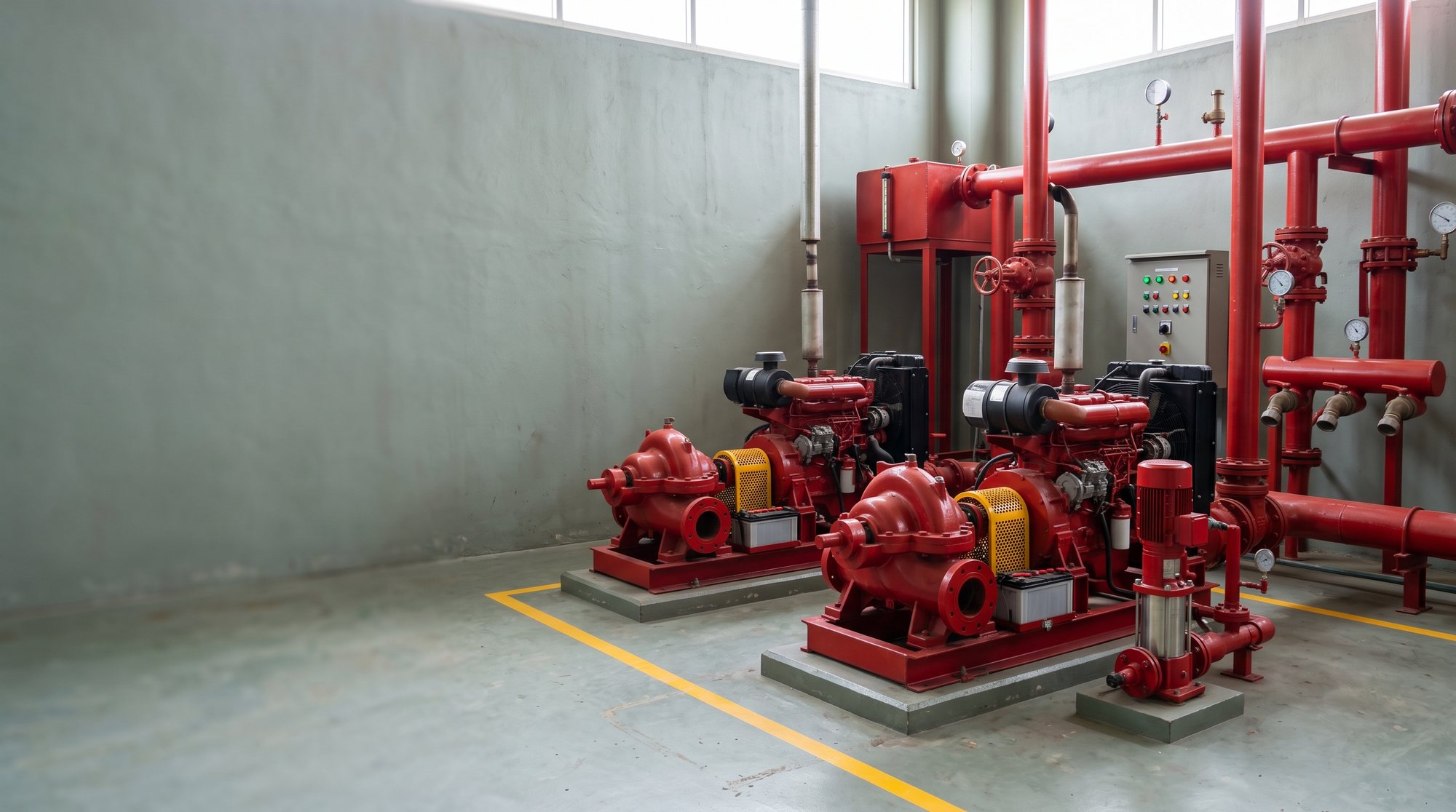
Weekly diesel fire pump run test
Tell the control room, set the controller to test, start the pump, run it for 30 minutes and record suction and discharge pressure, engine oil pressure and coolant temperature; check the packing glands drip slowly, then stop the pump and put the controller back to Auto.
Auto-start test on falling header pressure
Open the controller's pressure test drain, confirm the jockey pump starts first and the diesel pump starts at its set pressure, record the start pressure, close the drain and reset the controller to Auto.
Jockey pump and header pressure check
Confirm the ring main pressure is in its normal band and the jockey pump starts and stops at its set points; frequent jockey starts point to a leak in the ring main.
Flow test through the test header
Connect the test hoses, open the test header hose valves one by one, read flow and discharge pressure against the pump curve, then close the valves and drain the hoses.
Tap a procedure to see its steps
FP-1 Firewater pump house Diesel fire pumps, the jockey pump and the controller that keep the firewater ring main ready.
Field IQ procedures
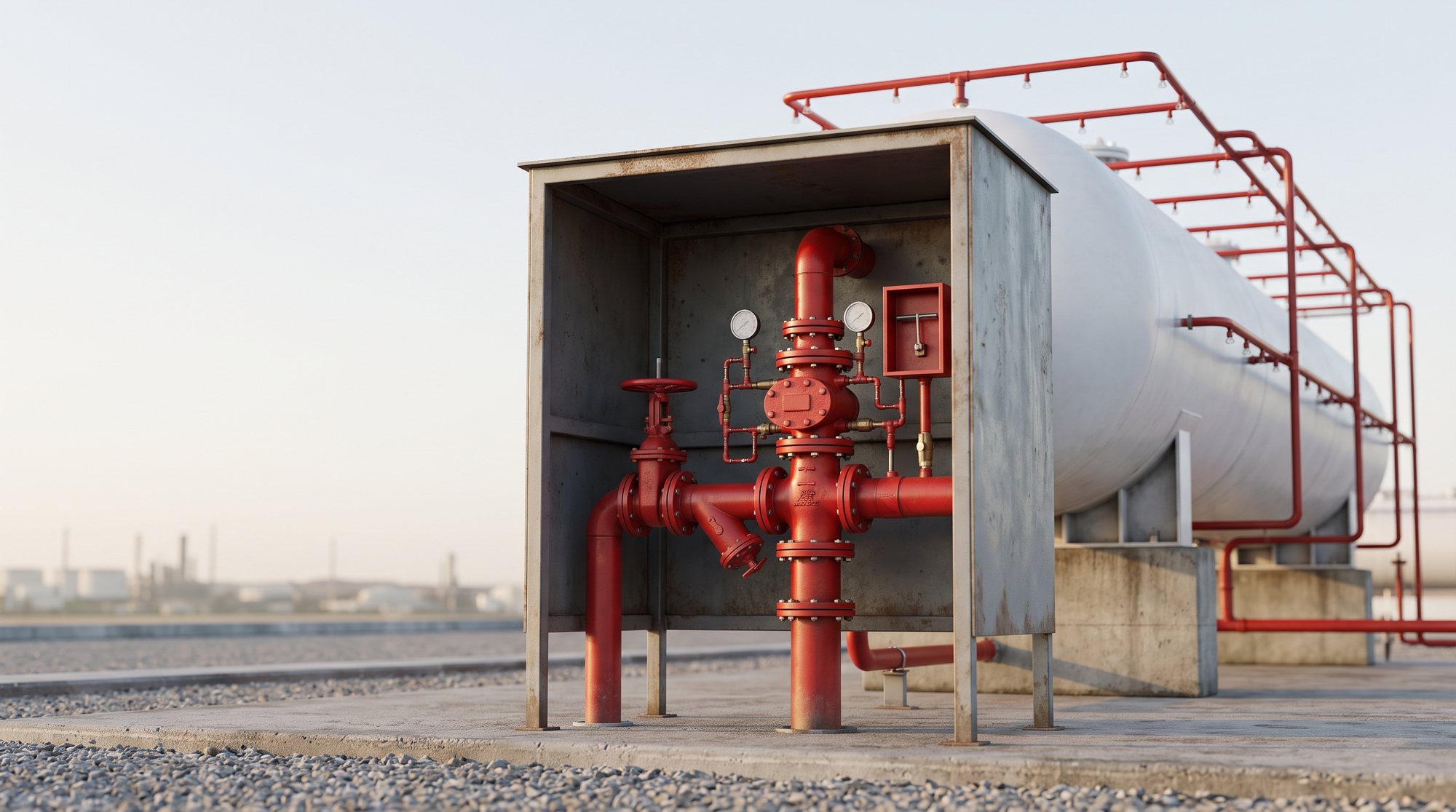
Deluge valve trip test
Get the permit and tell the control room, close the main isolation valve for a dry trip (or keep it open for an approved full-flow test), operate the manual release, confirm the valve opens and the alarm pressure switch and gong operate, and record the times.
Reset the deluge valve after a trip
Close the isolation valve, drain the valve body, reset the clapper and latch, re-prime the priming chamber, then open the isolation valve slowly and check the two gauges read the same.
Flush the Y-strainer
Open the strainer flushing valve until the water runs clear, close it, and record the flush.
Inspect the spray nozzles on the vessel
Walk the spray ring, check every nozzle is clear and pointing at the vessel, check the ring pipe supports and look for corrosion or missing caps.
Tap a procedure to see its steps
FP-2 Deluge valve station A deluge valve that floods the spray ring around an LPG storage vessel to keep it cool in a fire.
Field IQ procedures
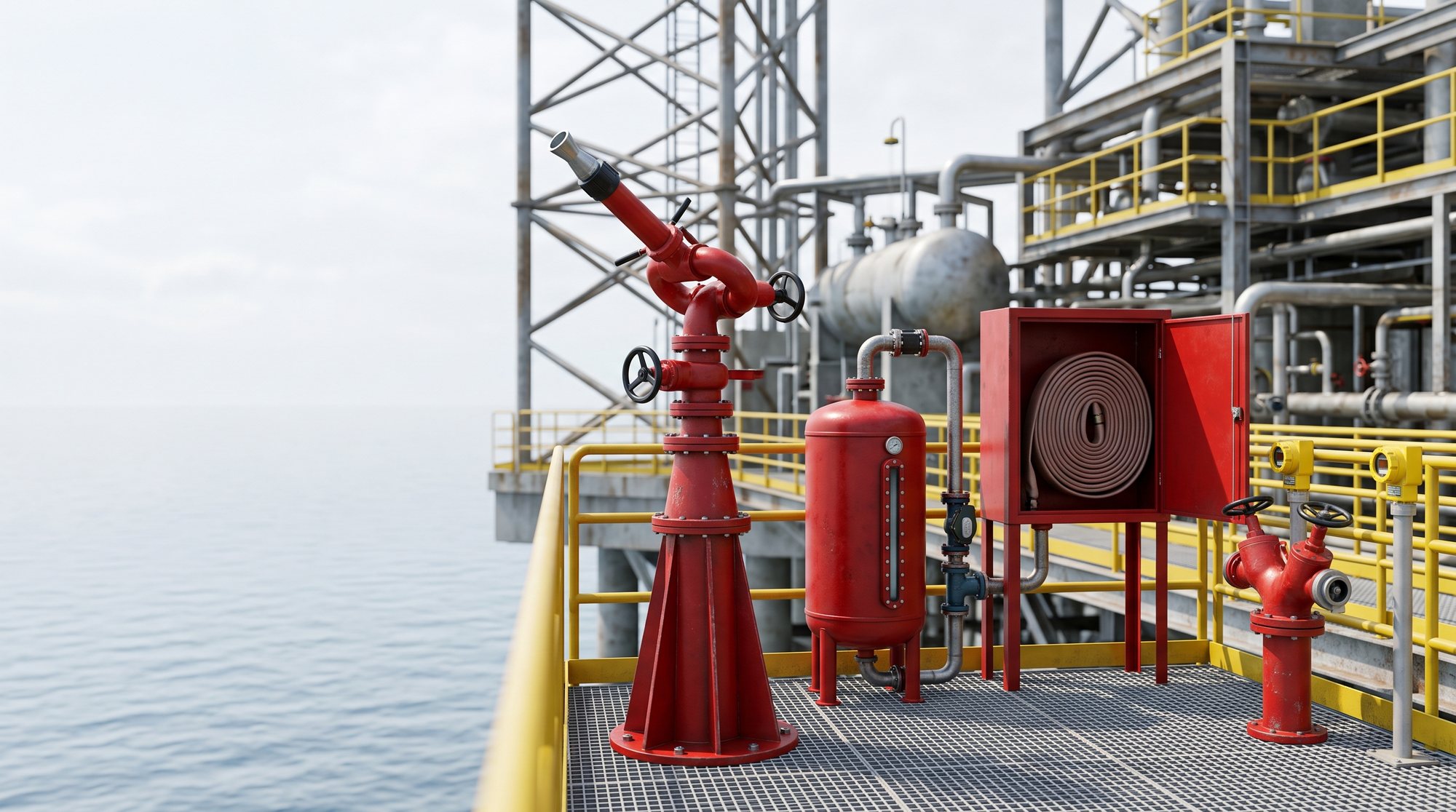
Foam monitor: unlock, aim and park
Unlock the monitor, turn it through its full sweep and elevation with the handwheels, set the nozzle pattern lever, and lock it back in its parked position; open the monitor valve only when ordered.
Foam concentrate level and sample check
Read the foam tank level in the sight glass, take a sample from the sample valve, and confirm the proportioner valves are in their normal positions.
Fire and gas detector bump test
Ask the control room to inhibit the detector, apply test gas or the test lamp, confirm the alarm reaches the fire and gas panel, then restore the detector.
Hose reel and hydrant flush
Run out the hose, open the valve and check the flow, open each hydrant outlet briefly to flush it, then close, drain and rewind the hose.
Tap a procedure to see its steps
FP-3 Offshore firefighting station Foam monitor, foam tank, hose reel, hydrant and fire and gas detectors on a production platform deck.
AI concept images of generic, unbranded equipment, made 12 October 2026. Procedures are training examples, not site-approved instructions.